Nutrition & evidence
Do we need meat for protein? What the evidence says
How much protein you really need, and how lentils, beans, tofu and soy compare with meat and dairy, in a few simple charts. The short answer: plants can cover it.
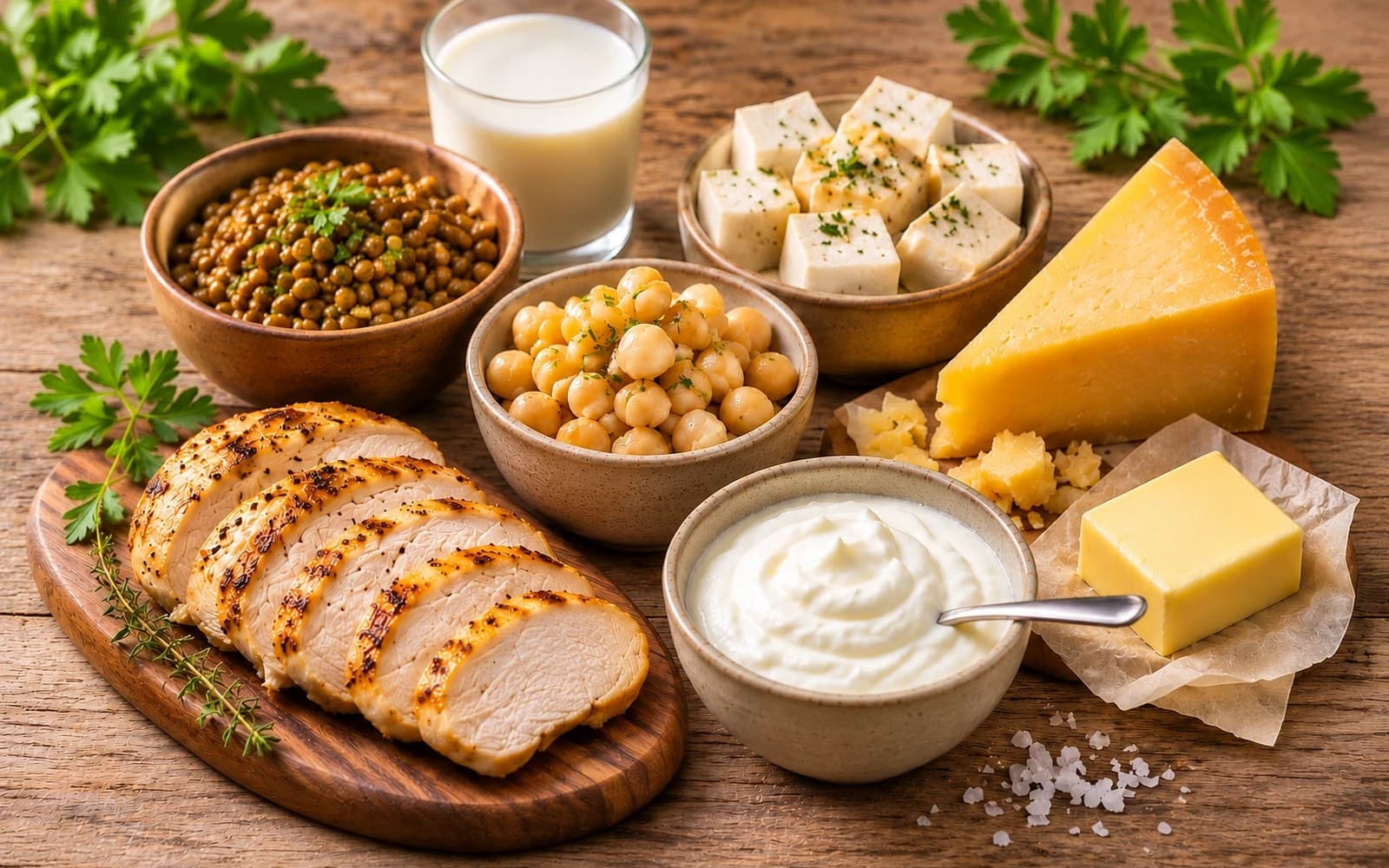
No, you do not need meat, or any animal food, to get enough protein. Most adults need about 58 g a day, and beans, lentils, peas, tofu and other soy foods, nuts and seeds can supply all of it.
How much protein do you need?
58 g of protein a day
The World Health Organization’s figure is 0.83 g for each kilogram you weigh. It assumes good-quality protein. If the protein in your diet is harder to digest, the target goes up. [1]
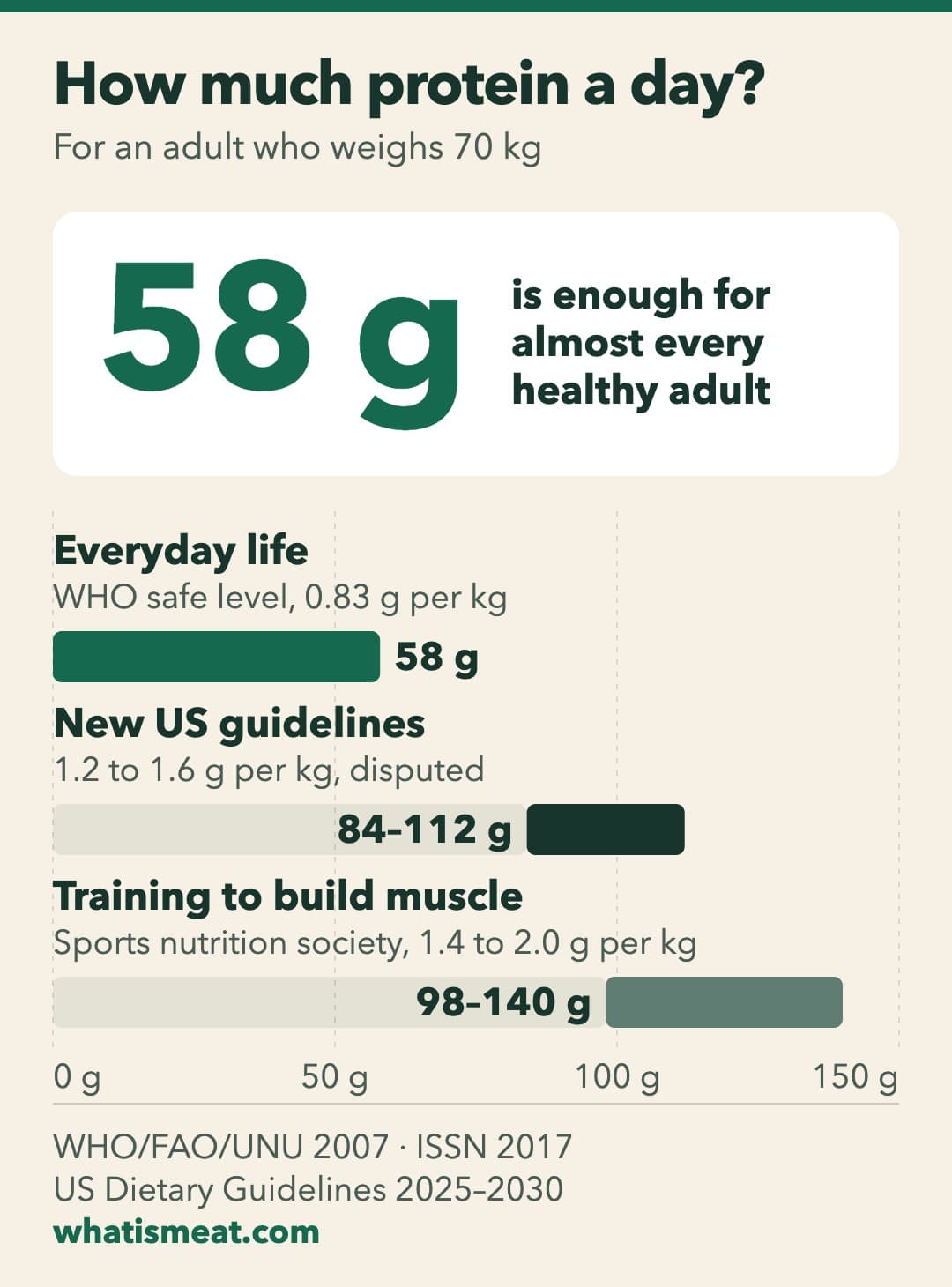
The new US guidelines aim higher, at 1.2 to 1.6 g per kg a day. [2]
Some nutrition scientists say that target rests on too narrow a base to apply to everyone. [3]
What 58 g looks like
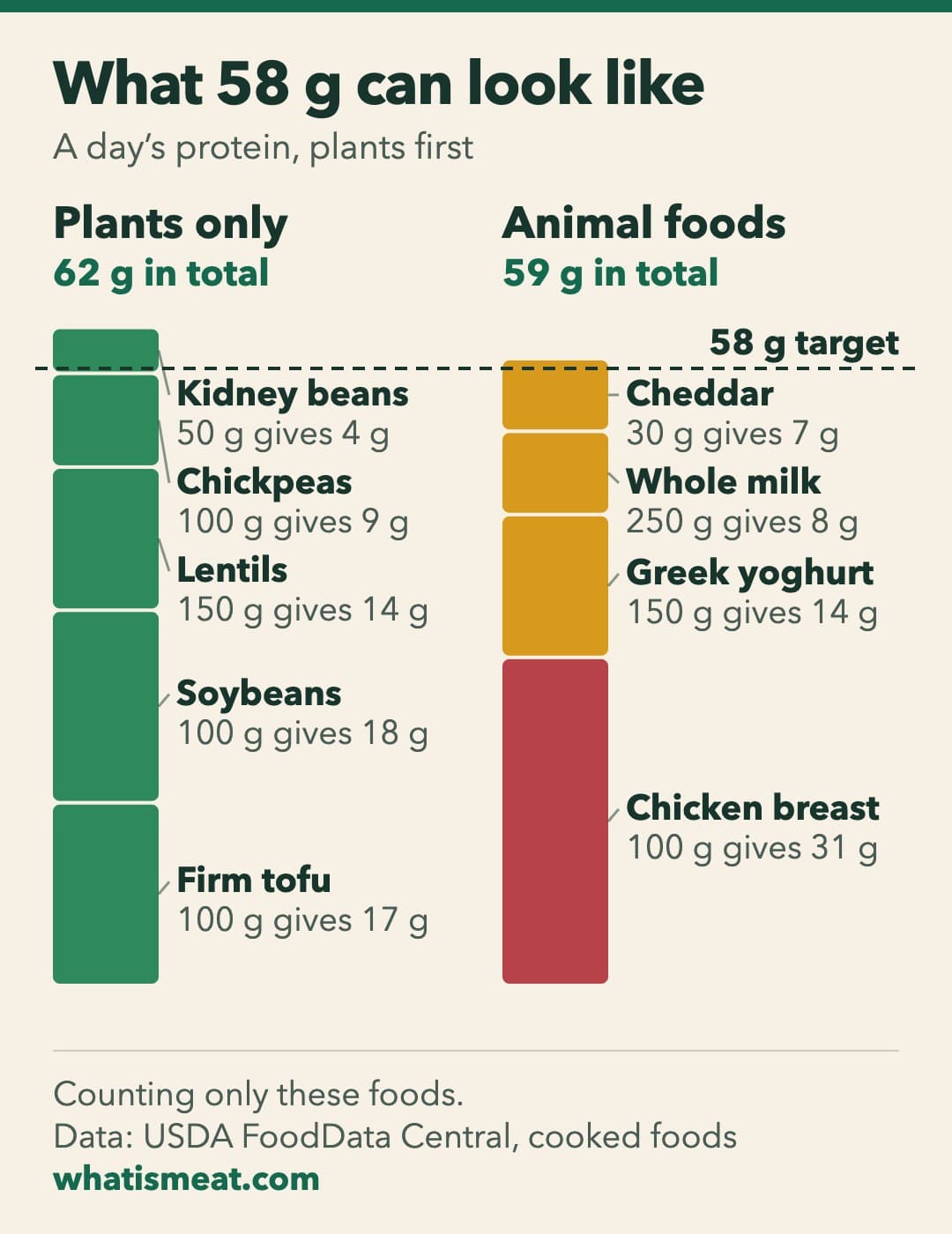
Tofu, soybeans, lentils, chickpeas and beans pass the target on their own. Anything else you eat that day adds more. [5]
Plant and animal protein, side by side
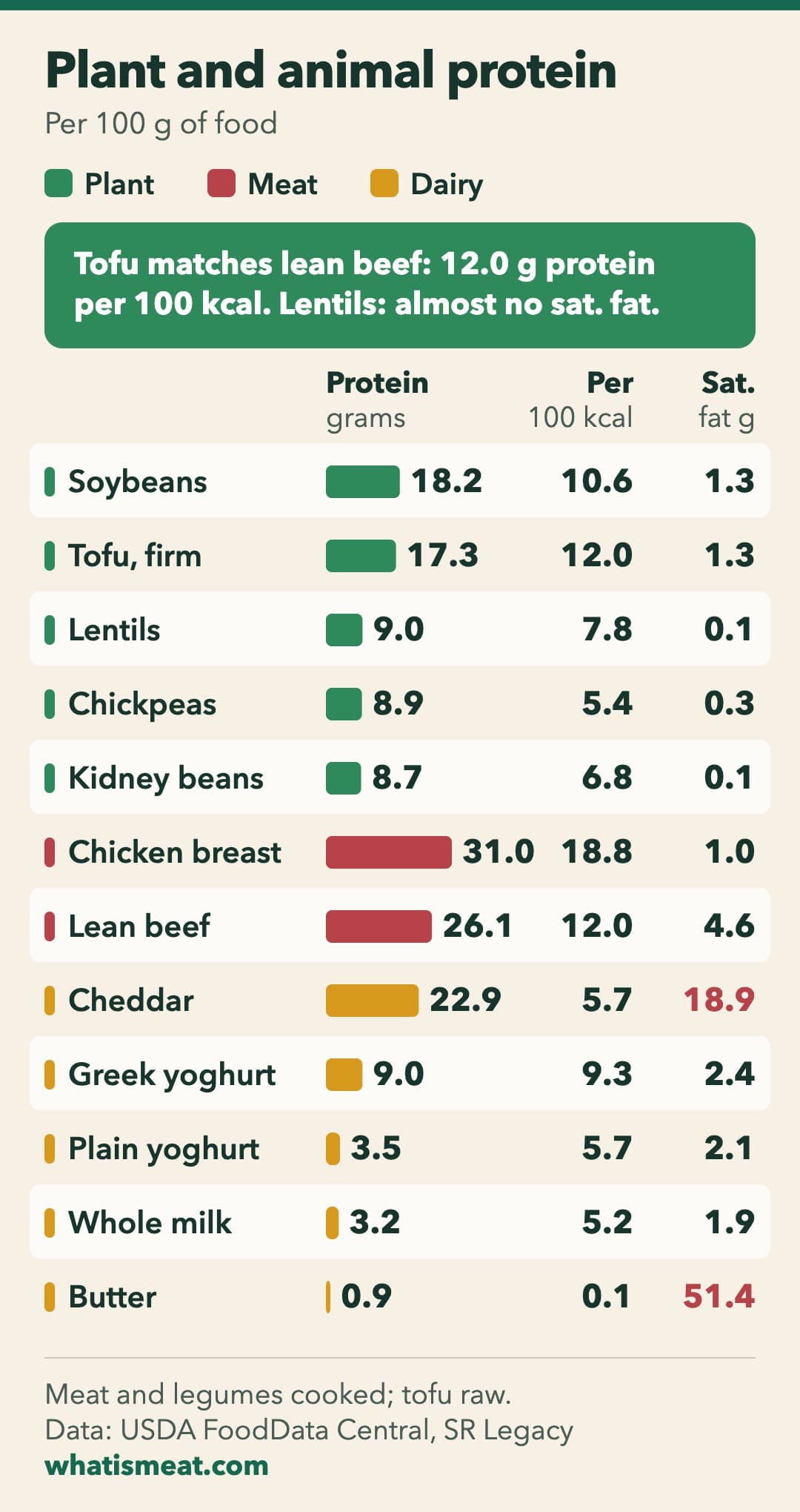
Soy foods are strong protein sources. Per 100 kcal, tofu gives 12.0 g of protein, the same as lean beef. Lentils and beans hold about as much protein as Greek yoghurt, with almost no saturated fat. [5]
Cheddar has 18.9 g of saturated fat per 100 g, and butter is mostly fat. WHO advises keeping saturated fat to 10% of energy or less, about 22 g on a 2,000 kcal day (our arithmetic). [10]
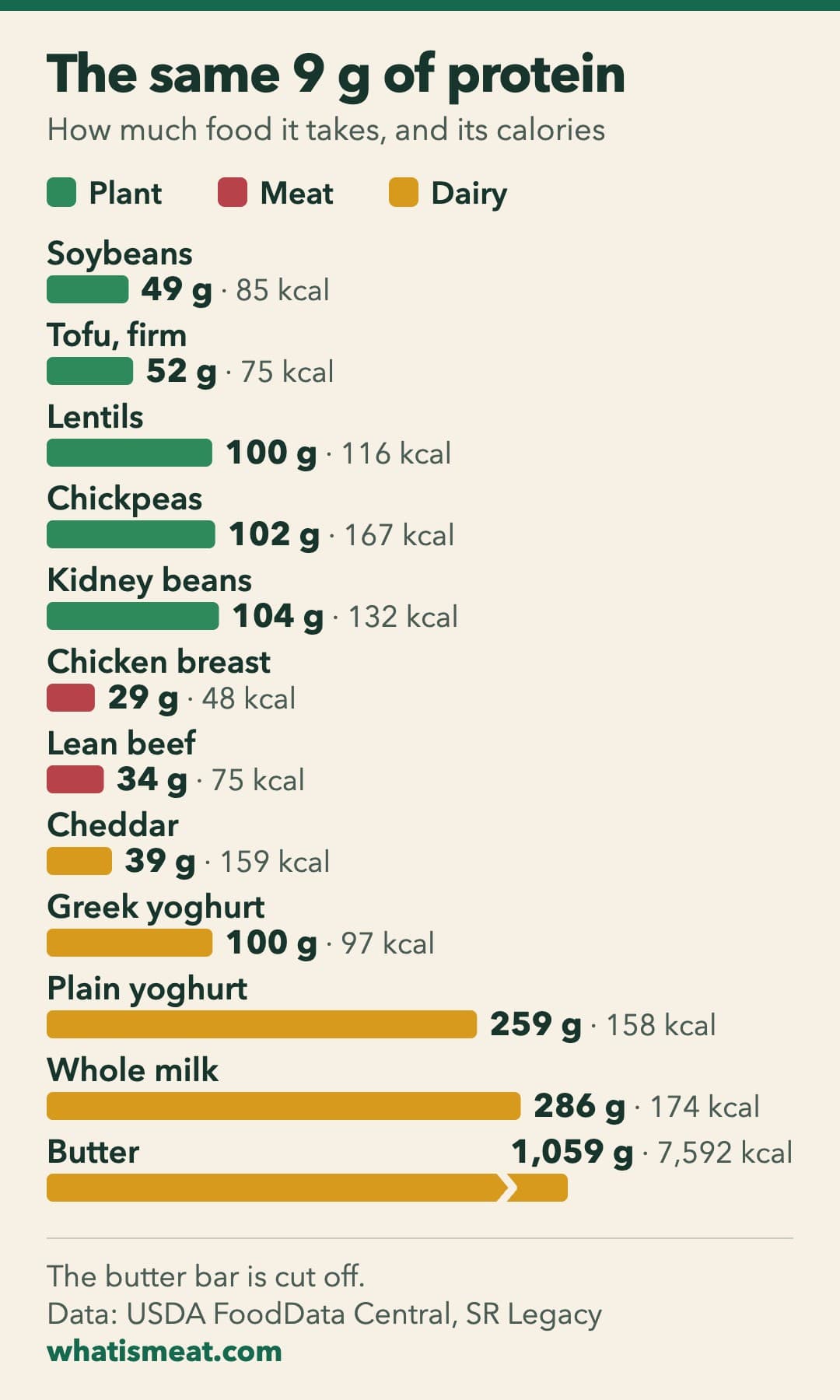
The same 9 g of protein
100 g of cooked lentils gives about 9 g of protein. Here is how much of other foods it takes to get the same. [5]
Is plant protein “incomplete”?
No. All plant foods contain all the essential amino acids, the building blocks of protein; some just have less of one. A review calls the words “complete” and “incomplete” misleading, and finds beans, lentils, nuts and seeds enough for adults. [7]
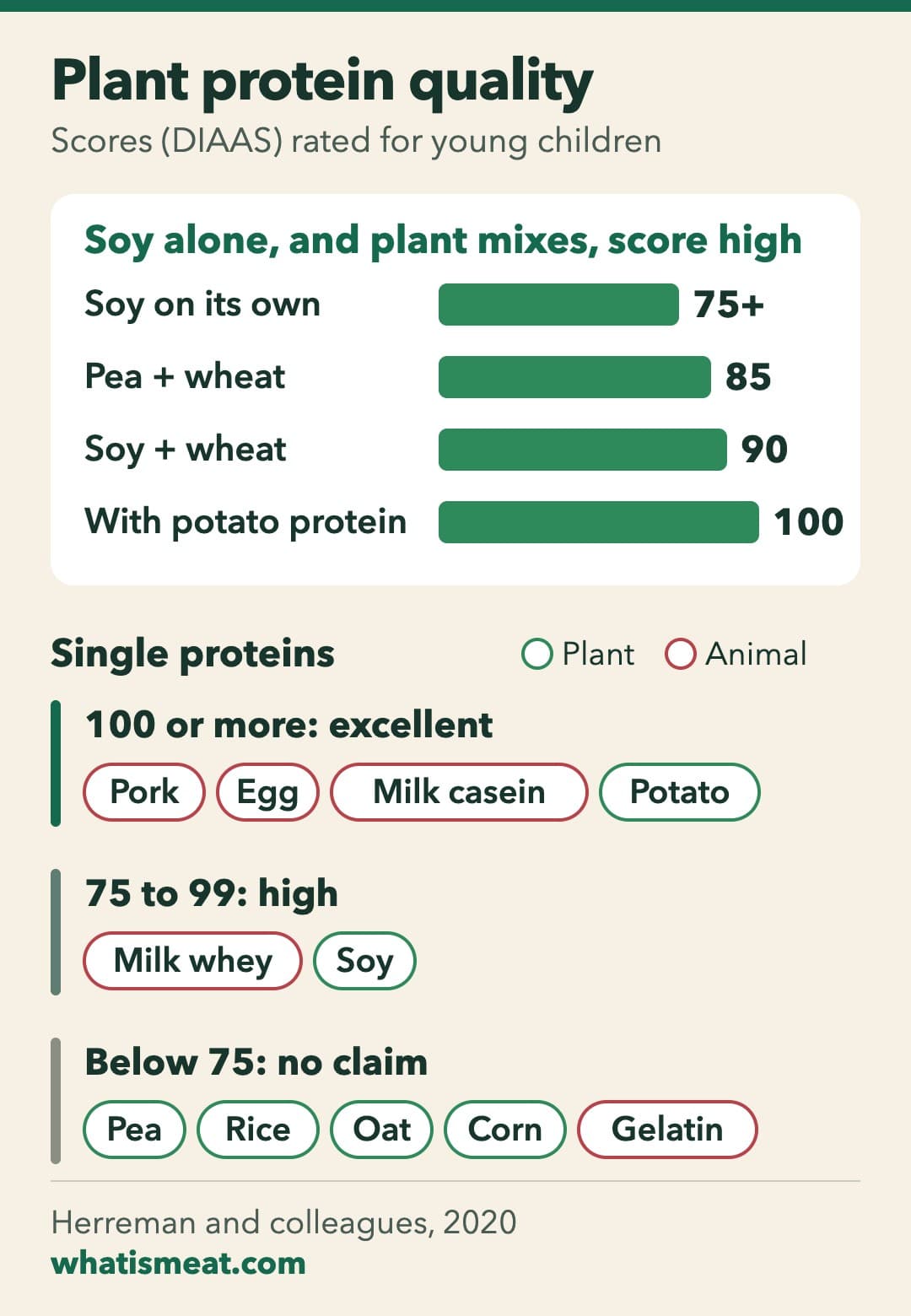
Soy scores high alone; plant mixes score higher. [6]
Variety and enough food still matter: WHO found that diets of mostly cereals and little protein can fall short. [1]
Rice, roti and dal
A plant-based meal of rice, roti, dal and sabzi, a vegetable curry, can cover protein. India’s dietary guidelines say a varied diet meets protein needs easily, even a vegan one, but diets of mostly cereals may lack some essential amino acids. [17]
Rice and wheat are low in lysine, an essential amino acid, and dal and other pulses are rich in it, so together they make better protein. The guidelines suggest about 3 parts cereals to 1 part pulses, by raw weight. [17]
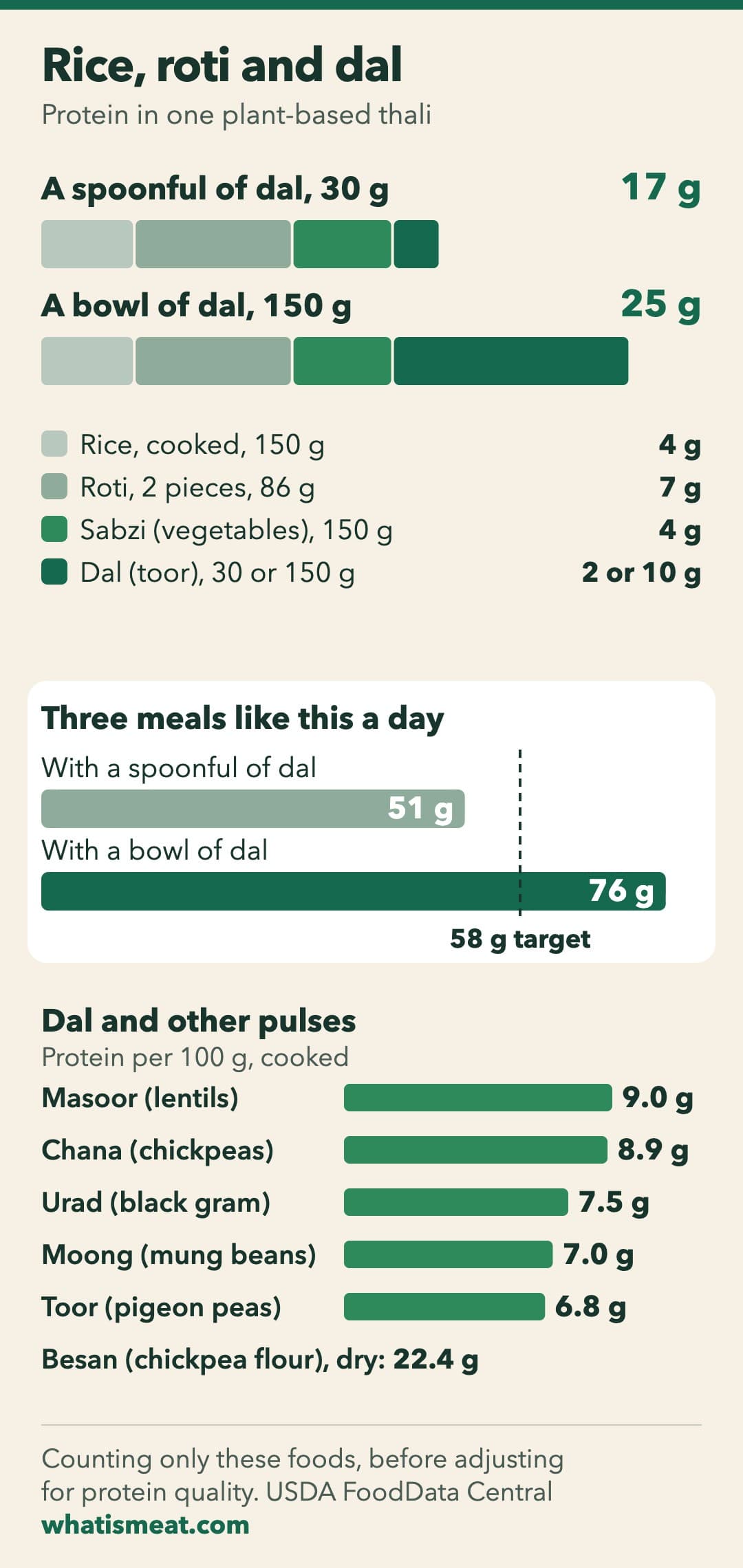
The weak point is too little dal. A review of Indian surveys found that cereals supply almost 60% of protein, and that about a third of sedentary rural people may not meet their needs. More pulses close that gap; meat is not needed. [18]
Plant protein and health
5 per cent lower risk of death from any cause
The Academy of Nutrition and Dietetics says well-planned vegetarian and vegan diets can meet adults’ needs. Its paper covers adults only. [12]
A review for the Nordic nutrition recommendations advises a shift towards more plant protein for a healthy, sustainable diet. [13]
How vegan athletes get their protein
The International Society of Sports Nutrition finds 1.4 to 2.0 g per kg a day enough for most people who train: 112 to 160 g at 80 kg (our arithmetic), ideally spread over doses of 20 to 40 g. [4]
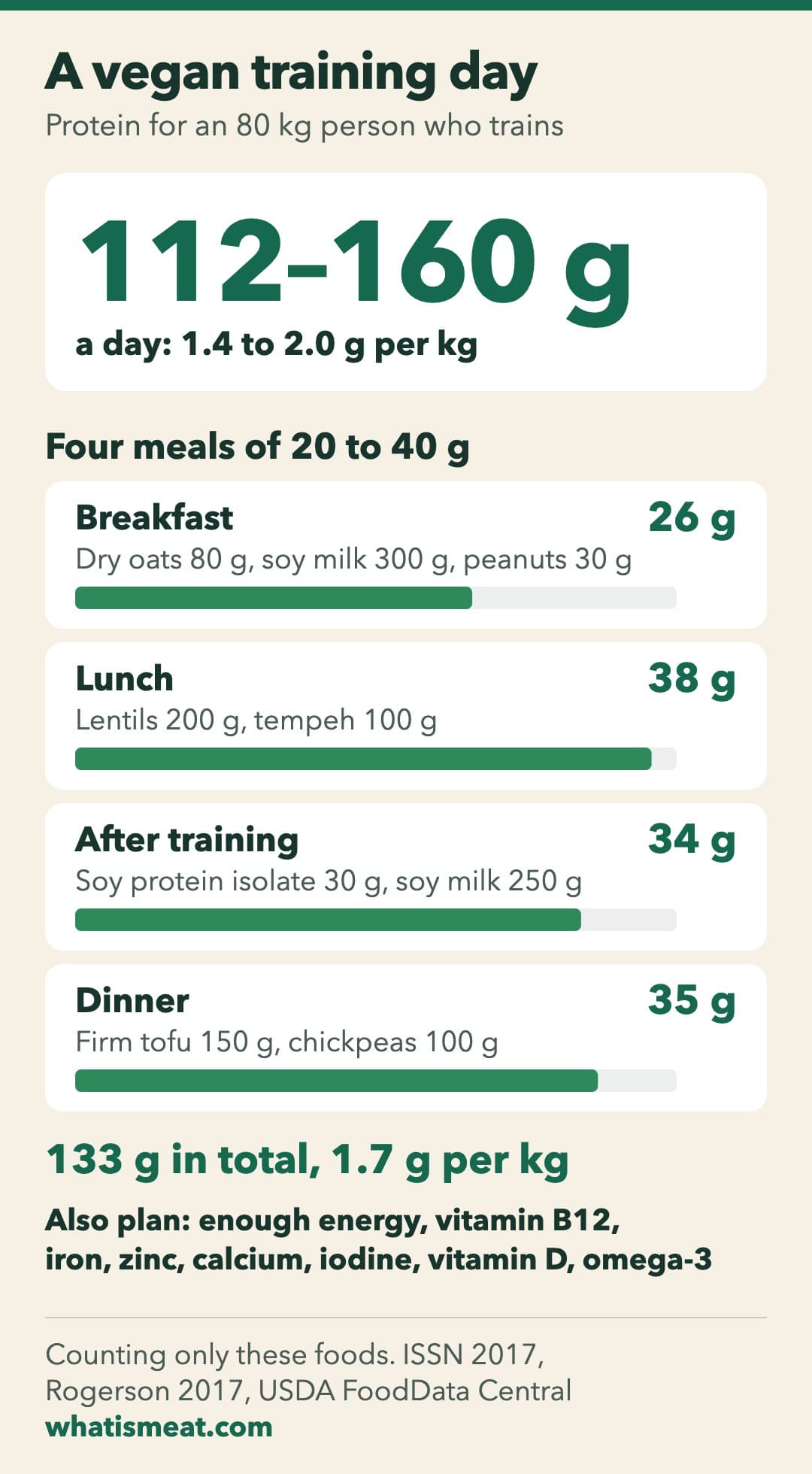
In a 12-week study of 38 untrained young men eating 1.6 g per kg, vegans taking soy protein gained muscle and strength no differently from omnivores taking whey. [14]
A meta-analysis of 16 trials found plant and animal protein no different overall for strength or lean mass in kilograms, though adults under 50 gained slightly more with animal protein. [15]
Planning for children
Children need a bit more protein per kilogram than adults, but little in grams: about 17 to 18 g a day at 20 kg (our arithmetic). [1]
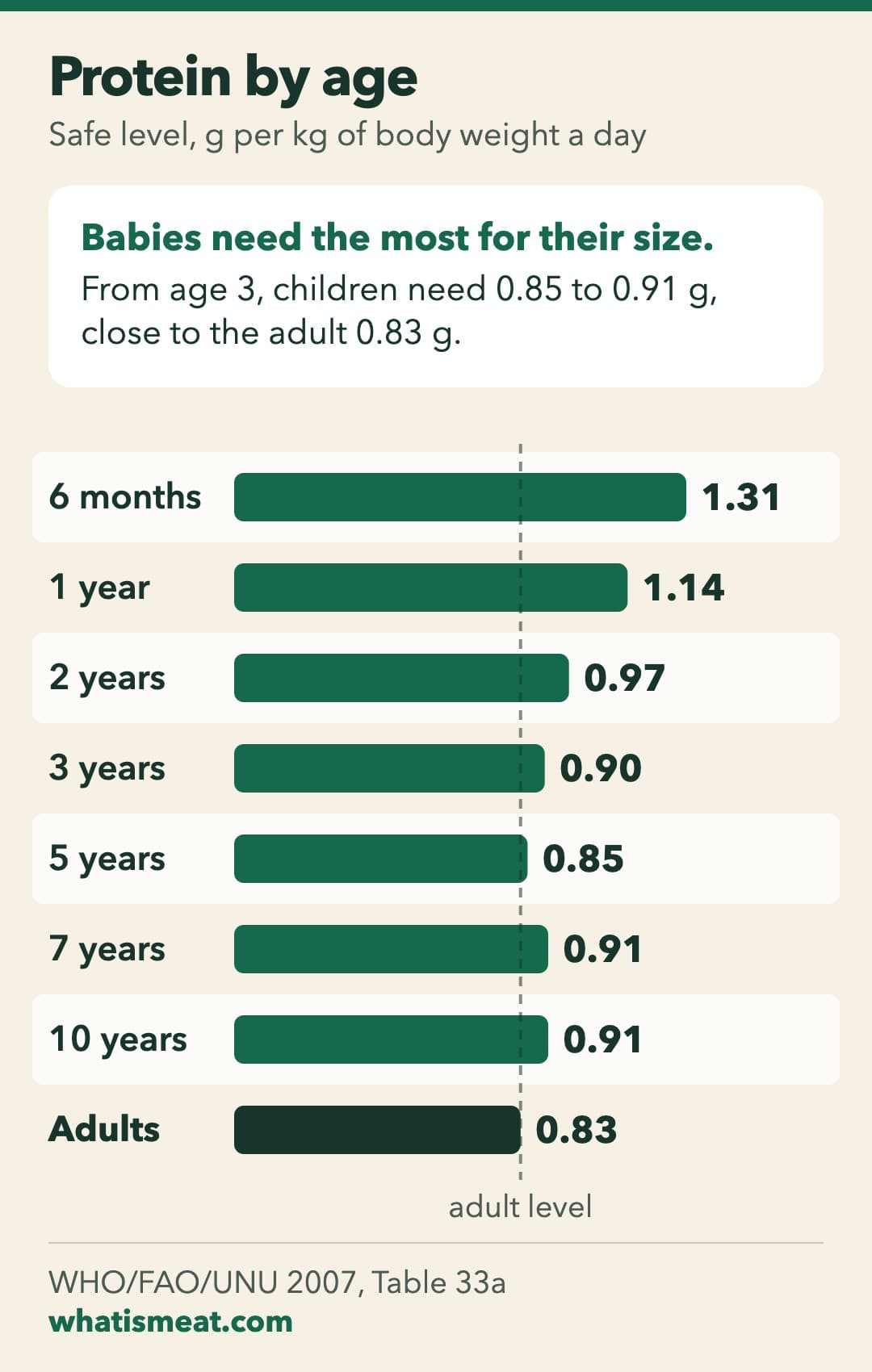
Protein is rarely the hard part, because children need so much energy compared with protein. Planning is about other nutrients. [7]
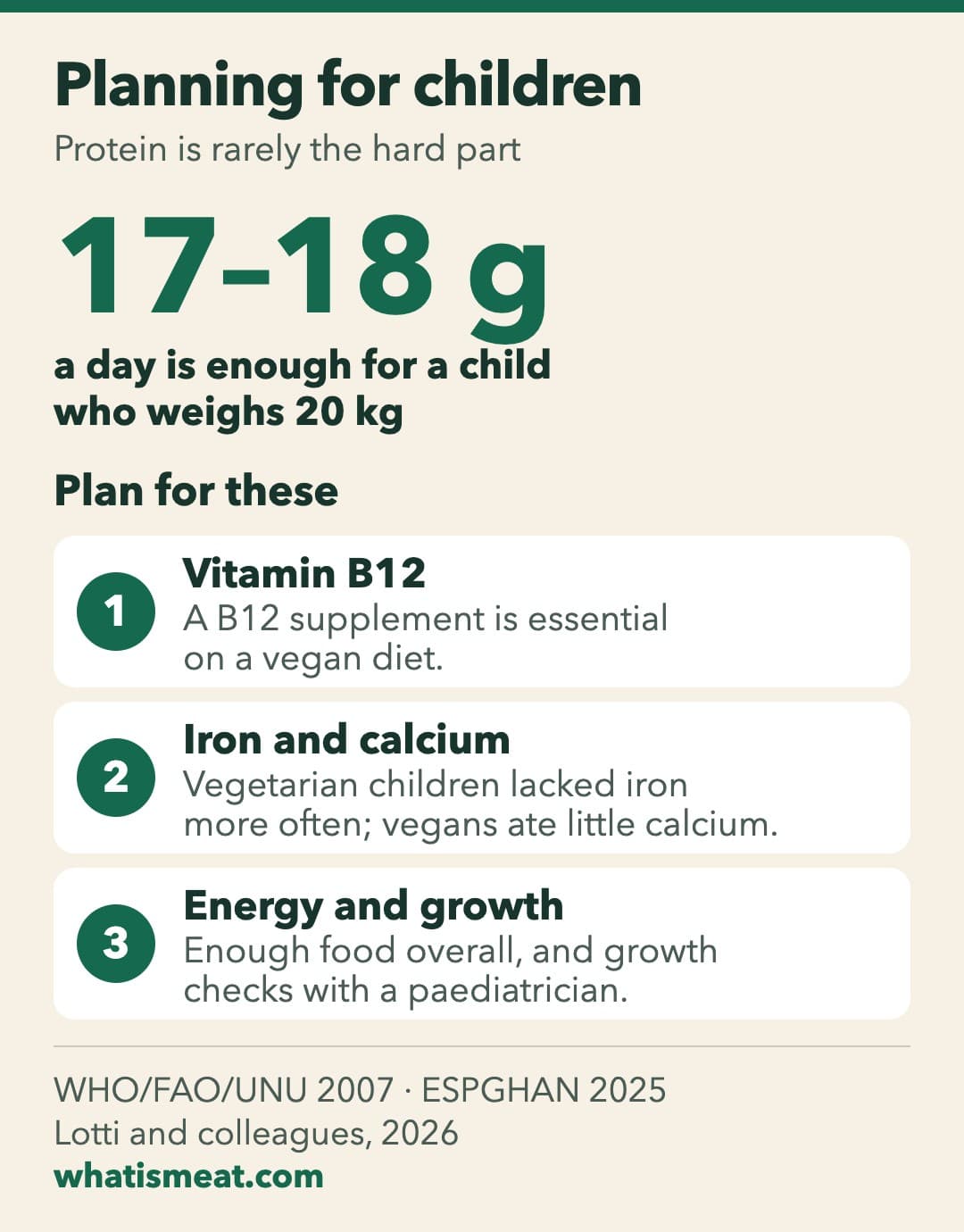
In a 2026 review of 59 studies, vegetarian and vegan children ate less protein, B12, vitamin D and zinc on average. Vegan children were shorter on average and more likely to lack B12, though most averages stayed within normal ranges. [8]
ESPGHAN, Europe’s paediatric nutrition society, saw no significant height differences but calls the growth evidence for strict vegan diets inconclusive. It advises B12 supplements and regular growth checks. [9]
The bottom line
You do not need meat, or any animal food, to meet your protein needs. Plants can do it. [17]
Animal foods are a convenient source of good-quality protein, but not an essential one.
For children, plan with a paediatrician or dietitian: give B12 and watch iron, calcium and growth. Evidence on strict vegan diets in childhood is still inconclusive.
A separate question
Whether to eat animals is a separate question. Our interactive story follows one cow from field to plate at whatismeat.com.
Share this article
Sources & notes
Sources checked
- WHO/FAO/UNU · 2007Protein and amino acid requirements in human nutrition (WHO Technical Report Series 935)
Gives the adult safe level of 0.83 g per kg a day (average requirement 0.66 g), the quality adjustment for less digestible protein, and the childhood safe levels (Table 33a). Its modelling, on limited intake data, flagged mostly cereal, low-protein diets as at risk of falling short, as well as some vegetarian and, to a lesser degree, some omnivore diets. 58 g for 70 kg and 17–18 g for a 20 kg child are our arithmetic.
- US Departments of Agriculture and of Health and Human Services · January 2026Dietary Guidelines for Americans, 2025–2030
Sets a protein goal of 1.2–1.6 g per kg a day and lists animal and plant protein foods, including beans, peas, lentils, nuts, seeds and soy. It also favours full-fat dairy and says vegan diets show shortfalls, including protein, advising monitoring and supplements.
- Pasiakos and colleagues · The Journal of Nutrition · 2026Perspectives on the Protein Recommendations in the 2025-2030 Dietary Guidelines for Americans
Argues the new target rests on a rapid review of weight-management trials and is not comprehensive enough for everyone; the authors agree that protein matters. It is their assessment, not a consensus.
- Jäger and colleagues · Journal of the International Society of Sports Nutrition · 2017International Society of Sports Nutrition Position Stand: protein and exercise
Says 1.4–2.0 g per kg a day is sufficient for most exercising people building or keeping muscle mass, and that active people can meet their needs from whole foods. It is a sports nutrition society’s position for people who exercise, not general dietary guidance.
- US Department of Agriculture · April 2018 releaseUSDA FoodData Central, SR Legacy foods
Protein, energy and saturated fat per 100 g, read from the SR Legacy files on 5 November 2026: boiled soybeans, lentils, chickpeas and kidney beans, firm tofu (calcium sulfate) raw, chicken breast roasted without skin, beef 90% lean ground and broiled, cheddar, whole-milk Greek and plain yoghurt, whole milk and salted butter; for the training day also raw tempeh, dry oats, unsweetened fortified soy milk, dry-roasted peanuts and soy protein isolate; for the thali, long-grain white rice cooked, whole-wheat chapati or roti (commercially prepared, frozen; 43 g a piece), frozen mixed vegetables boiled, boiled pigeon peas (toor), lentils (variety not named), chickpeas, mungo beans (urad) and mung beans, and chickpea flour (besan). These US entries stand in for Indian dishes: real dal, roti and sabzi vary with recipe, water and portion, and tadka oil or ghee adds fat. Values for similar foods and brands differ. Portions, totals and per-100-kcal figures are our calculations.
- Herreman and colleagues · Food Science & Nutrition · 2020Comprehensive overview of the quality of plant- and animal-sourced proteins based on the digestible indispensable amino acid score
DIAAS for 5 animal and 12 plant proteins, using digestibility measured in pigs and the reference pattern for ages 0.5 to 3, plus modelled blends at optimal ratios (pea and wheat 85, soy and wheat 90, several blends with potato protein 100). Scores vary widely within one protein source; they rate single proteins, not meals.
- Mariotti and Gardner · Nutrients · 2019Dietary protein and amino acids in vegetarian diets: a review
Concludes that legumes, nuts and seeds are sufficient for protein adequacy in adults and that amino acid concerns are substantially overstated. Notes that all plant foods contain all 20 amino acids, including the 9 indispensable ones, in less optimal proportions; calls “complete” and “incomplete” misleading; assumes a reasonable variety of foods and enough energy. Finds no specific protein concern in children, because of their high energy needs; older adults are a more complex case.
- Lotti, Dinu and colleagues · Critical Reviews in Food Science and Nutrition · 2026Lacto-ovo-vegetarian and vegan diets in children and adolescents: a systematic review and meta-analysis of nutritional and health outcomes
59 studies, 48,626 children, including 1,289 vegans. Vegetarian children had lower intakes of energy, protein, B12, vitamin D and zinc, and higher odds of iron deficiency and anaemia; vegans had low calcium, shorter stature, lower BMI z-scores and higher odds of B12 deficiency. Most group averages stayed within paediatric reference ranges. Mostly observational studies.
- Verduci and colleagues · Journal of Pediatric Gastroenterology and Nutrition · 2025Vegan diet and nutritional status in infants, children and adolescents: a position paper based on a systematic search by the ESPGHAN Nutrition Committee
Ten studies, about 1,500 vegan children. Finds the evidence inconclusive on growth, with no significant differences in height or BMI z-scores; recommends monitoring intake, growth and nutritional status, attention to protein, omega-3, calcium and iron, and essential B12 supplementation.
- WHO · 17 July 2023WHO updates guidelines on fats and carbohydrates
Saturated fat at no more than 10% of total energy for everyone aged two and over. 22 g on 2,000 kcal is our arithmetic.
- Naghshi and colleagues · BMJ · 2020Dietary intake of total, animal, and plant proteins and risk of all cause, cardiovascular, and cancer mortality
A dose-response meta-analysis of 31 prospective cohort studies, 715,128 adults. Observational: it shows associations, not causes.
- Raj and colleagues · Journal of the Academy of Nutrition and Dietetics · 2025Vegetarian dietary patterns for adults: a position paper of the Academy of Nutrition and Dietetics
Appropriately planned vegetarian and vegan diets can be nutritionally adequate in adults. Covers nonpregnant, nonlactating adults only, not children.
- Geirsdóttir and Pajari · Food & Nutrition Research · 2023Protein: a scoping review for Nordic Nutrition Recommendations 2023
Judges the evidence linking protein intake itself to health limited or suggestive, and says a shift toward more plant-based protein would be advisable for a healthy and sustainable diet. Comprehensive data on children are lacking.
- Hevia-Larraín and colleagues · Sports Medicine · 2021High-protein plant-based diet versus a protein-matched omnivorous diet to support resistance training adaptations: a comparison between habitual vegans and omnivores
19 habitual vegan and 19 omnivorous untrained young men (about 26 years old) did 12 weeks of supervised resistance training twice a week, with protein topped up to 1.6 g per kg a day by soy (vegans) or whey (omnivores) supplements. Leg lean mass, muscle size and leg-press strength rose in both groups, with no significant differences between them. The groups were not randomised, and the study is small and short; it does not cover women, older adults or trained athletes.
- Lim and colleagues · Nutrients · 2021Animal protein versus plant protein in supporting lean mass and muscle strength: a systematic review and meta-analysis of randomized controlled trials
18 trials reviewed, 16 meta-analysed, with protein intakes generally above the recommended allowance. Protein source did not affect changes in absolute lean mass or strength, with or without resistance training; animal protein was favoured for percent lean mass, and adults under 50 gained more lean mass with it (0.41 kg on average).
- Rogerson · Journal of the International Society of Sports Nutrition · 2017Vegan diets: practical advice for athletes and exercisers
A narrative review that found little sports nutrition research on vegan athletes. Names enough energy and protein, vitamin B12, iron, zinc, calcium, iodine and vitamin D, and the omega-3 fats EPA and DHA as challenges, and argues that with planned food choices and appropriate supplements a vegan diet can meet most athletes’ needs. It is the author’s assessment; it calls for more research.
- ICMR-National Institute of Nutrition, Hyderabad · 2024Dietary Guidelines for Indians
Guideline 8 (pages 58–59): an adult allowance of 0.83 g per kg a day; protein needs are easily met from a diverse diet, even one of only plant foods, but mostly cereal-based diets may not provide all essential amino acids. Cereals are low in lysine and pulses rich in it, so cereals and pulses at about 3:1 by raw weight can meet amino acid needs. It also calls animal proteins higher in quality and says 250 ml of milk a day further improves amino acid intake. Page 16: cereals supply 50–70% of energy, and pulses, meat, poultry and fish together 6–9%, against a recommended 14%.
- Swaminathan, Vaz and Kurpad · British Journal of Nutrition · 2012Protein intakes in India
A review of national nutrition surveys over 25 years: Indian diets get almost 60% of their protein from cereals, of relatively low digestibility and quality. Intakes among disadvantaged rural, slum and tribal groups were about 1 g per kg a day, but quality-adjusted, about one third of the sedentary rural population is likely at risk of not meeting needs. Its data cover mainly disadvantaged groups, not all of India.
Written by the team behind What Is Meat? This article is not medical advice: speak to a paediatrician or registered dietitian before changing a child’s diet. We checked every figure against the original report, abstract or data file on 5 November 2026. Most studies of diet and health, and of vegetarian and vegan children, are observational, so they show differences between groups, not causes.